Saturday, September 6, 2014

Do our Lives or our Libraries Define Us?

My dear, now deceased friend Fleming used to say that he had lived many lives in a single lifetime.  I felt and still feel the same about myself.  My various identities, created in part by my occupations, jobs and interests through the decades, really were worlds apart sometimes one from the other.  Some were lived simultaneously.  Others were consecutive in nature.

I consider motherhood to be an identity by the way, and one that very much changes the soul.  I had other interests and occupations while I was engaged in being a mother on a full-time basis, but motherhood was at the very centre of my life at that point.  Now that my daughter is at a University almost half a day from here, my role as Mother has declined significantly but for two decades, it defined and shaped my destiny.

I am a Collector and always would have been one, had I not moved from continent to continent quite often, thereby precluding the opportunity to really amass a Collection of any magnitude.  There is an old axiom to the effect that 'a rolling stone gathers no moss'.  For better or worse, that was true in my own life until I had a child.  I then stayed in the same place for two decades, mainly for her sake and not because I had chosen the location for myself.  Children crave stability and although I felt that my own childhood was enriched immeasurably by world travel, it was very lonely as well in many ways.  My daughter has traveled but her childhood was spent in one place.

Finally, I have moved from the house where I spent two decades raising my daughter.  The new home is not that far from the old geographically but the problem of moving my belongings from the old home to the new has been huge.  After a year, at least half of my belongings still are at the old house and it gives me a curious sense of dislocation as well as a great deal of anxiety.  The older I become, the less secure I am emotionally.  I can become agitated or anxious about things that would not have affected me in the least when I was Freya's age.  I suppose part of the reason I am concerned about my belongings is the fact that I lost so much in my youth whenever I moved.  I am heartily tired of losing things that I love.  Furthermore, the chances of replacing anything have diminished drastically.  I cannot reinvent my life so quickly at this point.

I cherish my collection of edged weapons as well as my collection of dolls and plush toys, my small collection of antique clothing and jewelry and my porcelain, but above all else, I cherish my books.  I was able to bring a few bags filled with books to the new house last week and I spent a couple of hours on my birthday dusting them and placing them in bookcases.  It was then that I realised a stranger only need look at my books to know me.  All of my interests, including my interest in dolls and edged weapons, in Napoleon and Lawrence, in fine jewelry, textiles and porcelain... all of these are encapsulated in my library.

There is a difference between the world of the imagination and the concrete world and I do enjoy the tactile ability to hold a dagger or doll as well as being able to be surrounded by them when I lay in bed.  Being physically disabled now makes these objects more important to me.  In the past, when I lived in London or New York, it was easy enough to visit a museum to surround myself with treasures any time I wished.   I no longer have the freedom to do that and I therefore believe that the little collections I have amassed have acquired more value to me because they now are the representatives or ambassadors of a wider world I cannot experience without great difficulty.

There is a wonderful woman here who has been my sole source of assistance in terms of moving my items from Point A to Point B.  She is the very soul of generosity but I know she is tired of carrying bags of my dolls and books from one house to another.  During the last trip, she turned to me and declared: 'You should get rid of some of those books!'

The world is divided between people who treasure books and people who really cannot comprehend their value.  In this age of technology another split has occurred between people who still treasure real books and people who would be just as happy to read a book on the Kindle or laptop or other device.  I am not opposed to the use of the internet for my research at all, but I still value my library of reference books far more.  Technology changes and people who are relying upon the 'Cloud' for example one day may find that it has vanished into thin air, taking all their invisible stuff with it.  Books are permanent, unless they are destroyed by an Act of God in a fire or flood or other natural or manmade calamity.  One can inherit books from a parent or grandparent.  One can pass them down to a child or grandchild.  They are part of our personal history.

Once again, I am aware of the enormous gap between myself and most of the people I know here.  There are so many qualities that set me apart at this point and not the least of them the inability to move freely from one room to another or to participate in many of the activities that people consider to be 'fun'.  I no longer can dance or hike, for example.  I could not go on most of the rides at a fair, although I would hope I still could ride a carousel horse if the opportunity arose.  As I cannot sit for any length of time, however, the ability to travel has decreased somewhat.

And yet... and yet... do I not have a larger world at my disposal than this lovely lady who helps me move those books she considers disposable?  I only need open a book to be transported to another place.  Whether it is a book of fairy tales or a book on the history of Sumer, my mind can be freed temporarily from the shackles of physical disability as well as the shackles of time, space and reality.

There was a time when I was hospitalised for a terrible cluster migraine and I could not read.  I needed darkness as well as silence but I did have an art book and I was able to look at one painting for a brief instant, shut my eyes and use my imagination to weave some sort of other reality from that painting...  later to turn the page, look at another painting and perform the same magic.  The pain did not disappear but I gave myself a little window from which to imagine freedom if not live it.

There are a number of authors of books for children who create rich tapestries, weaving art with a tale to create a marvelous place where some one who is suffering can find a ittle relief.  Jan Brett is one of these.  Arthur Rackham and Howard Pyle are two other incredible artists who brought their tales to life through drawings and paintings.  Edmund Dulac... well, one could compile a long list really.  Those are some of the books that are treasures beyond price.


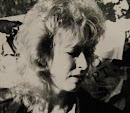
Here are some of the books most recently brought to the new house.  The reason the same book appears twice in front of both rows of books, is because a portrait of me is on the cover.  It is the Dutch edition of 'Blind Side' by William Bayer.  The photo was taken across the road from my flet in the East Village, 'back in the day' when I lived in Manhattan.  A very different life from the one I lead now!

Monday, August 25, 2014

Les Jetons de Napoleon

When I was a little girl, after reading 'The Three Musketeers' many times, I was very excited to find what I thought were two coins from the time of Louis XIV in a coin shop.  They did not cost much and my stepfather bought them for me.  I wondered even then how coins from that period could have such little value but it was not long before I discovered (rather to my disappointment) that they were not coins at all but rather 'jetons'.

Jetons in France tend to be commermorative medals that are struck like coins but ordinarily are made of brass or other lesser medals rather than gold or silver.  They originally were used as 'counters' throughout the Western world rather like the beads on an abacus.  Later, they were used in some countries as 'chips' or 'tokens' in gambling games.  In France, however, as in some other nations, they came to be used as propaganda tools, depicting the current ruler, his accomplishments or members of his family.

I did not see that many jetons in coin shops as an adult.  It was only recently that I found quite a few listed on Ebay.  I always look at Napoleonic memorabilia as well as items that deal with Lawrence of Arabia.  Usually, all of these items are too expensive for me to be able to bid on or purchase.  It was on the Anniversary of Napoleon's Death this year that I first saw jetons dedicated to him.

The jetons I found interested me precisely because they had been modified, thereby losing most of the small value they had.  Made of brass or a combination of base medals, a small ring had been added to the original 'coin', allowing it to be worn on a chain or watch fob.

The subject matter was interesting to me as well.  One of the larger jetons had Napoleon's tomb at Les Invalides on the reverse.  The smallest one depicted his son, Napoleon II, otherwise known as 'The Young Eagle'.  His official title was the 'Duke of Reichstadt' and this was the title given on the brass jeton with the date 1832.  Was the jeton made in 1832?  Who knows?  Unlike coins with specific weights and values, jetons were not used as currency and therefore any date is as likely to refer to the date of the event depicted on the counter as the date of manufacture.

Roman and Greek jetons probably are the first to have been made in Europe.  They were known as 'calculi' from the word for limestone or pebble.  (Calculus, the word from which is derived our 'calculation').  These stones were shaped like discs or balls cut in half.   Other ancient jetons were made from glass or bone.   They were made to be pushed over a counting board.  Thus the French named them 'jetons' from the verb 'to push' or 'to toss'.

The metal jetons appear to have surfaced in Europe in the 13th century during a revival of international trade probably fueled by the Crusades.  A wooden board with lines was used as the surface.  Less frequently, cloth inscribed with lines could be used but because of its durability, a wooden board was preferred.  Remember that zero did not exist where calculations using Roman numerals were concerned.

If any one is interested in the method by which jetons were used to calculate, it is not too difficult to visualise.  A series of horizontal lines on a wooden board or stone surface represented the various Roman 'units': I, X, C and M.  V, L and D would be given a place between the lines.  The result would be a 'tree' with the higher numbers at the top and the lowest at the bottom.   Numbers could be separated by vertical lines.  By adding or removing counters or jetons, one could arrive at a solution for addition, subtraction, multiplication and division problems.

Of course, it is much easier to calculate with the use of zero and Arabic numerals became popular among accountants and then with the general public.  Even then, many merchants and households, both secular and sacred, continued to use jetons to calculate.

The use of jetons in gaming houses would be a little different and would be rather like the use of 'chips' in modern casinos.  I doubt that they would have been used much in private homes but only in public gaming houses throughout Europe.  It would be a way to lend money to patrons as well as a method by which to keep real coinage 'safe' from possible criminals during the course of the games.  The real money could be kept under lock and key.

It appears that the manufacture of jetons throughout the Middle Ages and beyond occurred mainly in France and the Netherlands.  It therefore is no wonder that many jetons bear the profile of a French monarch or ruler.

My Louis XIV jetons were extremely large but the three I collected of Napoleon are quite small.  As they are made of base metal, I probably shan't wear them as jewelry but would like to think of another ornamental use for them as the ring allows them to be strung on a chain or string.  Evidently a small group of collectors have interested themselves in jetons for centuries.  It is only with the advent of Ebay that individuals have a wider market from which to find these charming trinkets.

Below are photographs of the three Napoleonic jetons.  One has an heraldric device on the reverse that may be Spanish rather than French.   Napoleon and his family ruled many nations briefly.  I wear a gold 40 Franc French coin from the Emperor's reign that proclaims him to be 'Re d'Italia' as well as Emperor of the French.  His brother Joseph was the very unpopular King of Spain for a few years.  The Lion Rampant was a device of Leon as well as the House of Savoy.   If these jetons are contemporary with the life and death of the Napoleonic dynasty, the place of manufacture of the jeton bearing the heraldric rampant lion could be Spain or Italy if not France.   The lion rampant was a very popular device, used by Scotland, England and other nations as well, but I mention Spain and Italia because both were ruled by France during Napoleon's reign.


I believe that these particular jetons were owned by other devotees of the Emperor.   The popularity of this Emperor has not decreased, despite the passage of time and staunch supporters can be found throughout the globe even now. 

Saturday, June 28, 2014

A Safe Addiction to Romance

At the risk of baring my soul to strangers (if any one ever reads these posts, which I sometimes doubt!), I spent much of my youth addicted to Romance, in search of a 'soulmate' who would share my dreams and satisfy my visions of an idyllic relationship.   European 19th century literature, after a steady diet of fairy tales in early childhood were at the foundation of this.  Perhaps there are soulmates and indeed, I have known individuals who shared most of my interests even if there were other impediments to the 'happily ever after' denouement so beloved of novelists.  19th Century Literature, by the way, is not filled with 'happily ever after' but it is filled with the soulmate concept and should the happy ending not be possible, one usually commits suicide because of course, one cannot settle for less!

In any case, when Freya was born, I decided that all that nonsense should be forgotten because there was nothing more important than my daughter and any search for Romance had to be shelved in the interest of giving her a stable life in which she and not some imagined soulmate took centre stage.

Enter Captain Nathaniel Claw.  I was a fan of computer games from the start.  With a young child of two, I looked for games that would be educational for a toddler at first.  As Freya became a bit older, I discovered the magnificent game of 'Claw', featuring a dashing pirate cat from the Golden Age of Piracy.  I became 'Freyashawk' to protect my young daughter who insisted on communicating online in the Claw Forum with other fans of Claw.  Ultimately, my strong-willed four year old decided that she wanted to marry Captain Claw and she dictated a love letter to him.  To their eternal credit, Monolith, a small firm that had created the game, actually took an interest in Freya and a guy who went by the name of Scorpio on the Forum responded to her love letters with very appropriate letters from the Captain himself.  They sent her gifts even in the form of an artist drawing of Claw and a shirt with his portrait emblazoned on it.

I do not know many children who have been as fortunate.  I certainly had no early experiences of that sort.  I do not know how much Freya actually remembers but I have to admit that I was envious of her romance with the Feline Pirate Captain. 

At this point, I achieved a small measure of notoriety and fame because I created a number of 'custom levels' for the game and wrote little stories to accompany them.  Every level I created had Freya's name written somewhere in gold coins that could be collected by the player.    I certainly am no expert in this sort of thing, but the game came with a programme that allowed the player to create his/her own custom Levels.  It was brilliant.

When Freya was about 7 years old, we discovered Harvest Moon.  She was the first to play it and one of the features of any Harvest Moon game is Courtship and Marriage.  You have a choice of potential spouses but you have to win the heart of the one you choose and it requires a great deal of attention, energy and time.  The first Harvest Moon game we had was 'Friends of Mineral Town' for the Game Boy Advance system.  In this game, your Character was male.  Freya wanted to marry a girl named Ann but was finding it difficult to win her heart.

I started to play the game to try to discover how to win hearts of Eligible Girls.  I wrote my first Harvest Moon guide in the form of a Journal.  I believe my character's name was Aloysius.   I myself preferred Karen to Ann but decided to try to win the hearts of EVERY Eligible Girl before I proposed to any one.  I therefore would be able to help Freya with her Courtship of Ann while following my own desires.

Meanwhile, I found a couple of online guides to the game, but they were filled with errors.  For some reason, I contacted IGN with some tips of my own and told my contact about my guide.  That was the beginning of about a decade of guide writing for IGN's site.

A new series, Rune Factory, was introduced.  It was described as 'Harvest Moon with a sword' and indeed, it fulfilled all of my desires for, with the usual Courtship option, one had the option to buy a forge and crafting bench to forge weapons and accessories.  In real life, I always was interested in forging and jewelry-making although I never had the money to pursue either, apart from creating designs for other people to implement.  There is a 'Martino' dagger made by a famous knifemaker and I designed a number of gold rings, earrings and pendants at one point in New York.

So here I was with a series of games that allowed one to experience the heady pleasures and thrills of Romance while forging blades and using them either as a man or a woman.  It was wonderful to be able to be a woman who fought as well as any man using a blade she herself had forged.  One could save the world while making friends and influencing people.  Moreover, my old strategy of making every eligible bachelor fall madly in love with me before I chose to propose to ANY ONE still was possible.

I should explain that both Harvest Moon and Rune Factory really cannot be described simply as games.  They are, in fact, interactive novles.  The amount of dialogue in any Harvest Moon or Rune Factory game can be greater than a bound novel.  Moreover, there are Events that are determined by your Character's behaviour and responses.  In other word, an Event may have three different possible paths.  The creative genius behind any Harvest Moon or Rune Factory game is astounding.  People who love to read but who have not explored any of these games are losing out on an incredible experience.  It never ceases to amaze me how something like 'gaming' can be perceived in narrow terms by individuals who call themselves artists or writers but who never have played a single RPG.

I now am playing Rune Factory 4.  My daughter is at University.  My life has become very circumscribed because of physical disabilities.  I live in constant severe pain but Rune Factory has not lost its magic.  In the process of courting the Eligible Bachelors in Selphia, I have expeirenced some genuinely thrilling romantic moments.  It is all very innocent, I must add.    Nonetheless, to read a bit of dialogue from a bachelor I fancy that actually causes my heart to skip a beat amazes me at this point.  I have to confess it is wonderful.

Tuesday, June 24, 2014

Religion, Ecstacy and Intoxication

Having studied the mystery religions for decades now, I realised suddenly that I may have missed the entire point of each and every one of them, including the root from which Christianity sprang:  is it possible that all Mystery Religions were founded upon nothing more nor less than recipes for intoxicants?  Could the business of 'Heaven and Hell' be nothing more than altered states of perception?  Is it possible that the only other 'realms' that exist in this world and the next are simply constructs of our perception at various moments and in various states of being?

It was when I was reading a very comprehensive translation of the Ras Shamra texts about Baal and Mot that I had this Epiphany.  Going back to Sumer and the tale of Inanna's Descent into the Underworld, I found the same themes there.  There is the Grape Vine and the Barley... and each is 'Lord' or 'Lady' of half of the year.  The descent of Dumuzi and, six months later, his sister Geshtinanna, represent the two seasons in which barley wine or beer and the wine of the grape are made.

How very discouraging in a way to discover that these noble myths may deal with nothing more ennobling than casking wine or placing liquid in skins for fermentation!

Yet, one only need look at the Aryan Hymns to see how the mystical Soma was elevated to the position of a deity.  Pages and pages devoted to the making of the Soma...


Monday, June 16, 2014

The 'Dark Night of the Soul'

It is a very old expression suffused with almost too much significance to bear and yet no one uses it now in the 'Age of Prozac'.  They dubbed the States 'Prozac Nation' a couple of decades ago and although Prozac appears to have lost some of its glitter, the general population still relies upon anti-depressants for the most part instead of examining and dealing with root causes.

Well, I am deep into the dark night of the soul myself now.  It has been a gradual decline from light to darkness, brought on by accelerated pain issues for the most part but partly as well by a recognition of my physical limitations and inability to take matters into my own hands to improve my life at this point.

The 'Dark Night of the Soul' is not something that is restricted to a small unsung group of people.  Almost every Saint has dealt with it.  They called it 'wrestling with demons' I believe.  I once thought in a vague sort of way that those bouts of physical conflict with the dark powers had something to do with sex.  After all, most 'religious' in Roman Catholic houses devoted to faith take vows of chastity. 

That point of view was exacerbated by Boccaccio's 'Decameron' and his tales of monks who insisted that the 'devil' aka the 'male member' needed to be 'put into hell', aka a nun's private and inviolate sanctuary... well, let us call as apade a spade, her cunt.  (Shakespeare used that word often and I think it actually needs to be rehabilitated a little.  It was a NICE word once upon a time, I do believe but now has become the worst insult possible.)

My own current Dark Night of the Soul is a little different from those suffered in my youth.  In those days, I would wrestle with the idea of God and why we had to suffer so much if He truly were merciful and loving and so on.  Oddly enough, I don't think about that at all.  I accept suffering as an integral and fundamental part of existence in the same way that maggots and beetles and rot and compost are part and parcel of the magical business of rebirth and resurrection of life.  I furthermore do not perceive the Daity is a parochial figure.  Although I consider myself a Roman Catholic for the most part, I refuse to accept any of the Judaic claptrap that has been gathered into the Christian lexicon.  No true Deity would choose a murderous nomadic group as 'His chosen people' or place a seal of approval on a dedicated campaign of genocide and destruction.  It simply does not wash in any way, shape or form in terms of a Being who is infinite and omnipotent and beyond the constraints of 'Good' and 'Evil' in human terms.

All the Creation myths from every civilisation and culture as well as those that were born of a single individual's creativty (such as Tolkien's Silmarillion) are tales that depict some aspect of Creation or Life or Death or the workings of the Universe.  They cannot possibly encompass the business of a truly Divine Being.

Suffering simply is part of the balance of existence in the same way that Death is.  One of the best analogies comes from the old Norse poems and the need to bang away at metal in a forge in order to strengthen and purity it and remove the slag.  If we are to improve or progress, suffering is a necessity.  We may not like it.  We may wish for the 'cup to pass' from us, but ultimately, if we have any desire whatsoever to improve or gain a measure of enlightenment, we must accept it rather than whinging endlessly or railing against the supposed 'injustice' of it.

Suffering has nothing whatsoever to do with justice or injustice.  Full stop.  That old chestnut of 'Why do bad things happen to good people?' is a question that is not even deserving of a response because it is tantamount to the use of metric measurements to define the state of Death.  'Bad' is a matter of perception in any case.  Things that HURT may not be bad in actual fact.  They are undesirable.  They are difficult, sometimes even impossible but I do not believe that one can give a moral character to them.

'Good people' is a matter of perception as well, although there is no doubt that some people are far better than others in their thoughts and actions and how they affect others and the Earth itself.  Even so, the suffering they endure is NOT a punishment nor is it sent by God in a specific fashion.  It simply is part of the business of Life and Death and Rebirth.

Suffering and Pain therefore should not have any effect on Faith.  A Divine Being definitely exists in my opinion.  Our Universe is not random ab initio, although that Being does not have a hand on the tiller of our own lives.  I therefore do not rail against God for the Dark Night of the Soul that I currently am experiencing.

What is the 'Dark Night of the Soul?'  Specifically, to me, it is a place and 'status' if one borrows Facebook terms where light cannot penetrate to any appreciable degree.  It is a state of being devoid of Hope.  They say that 'Hope springs eternal' and that is true but in the Dark Night of the Soul, one cannot find that source.  One cannot SEE any exit, unless Death is considered an Exit.

It actually is not Pain itself that has brought me here but a feeling of utter impotence.  When my life was unendurable in the past, I changed it.  Whether or not I made the right changes was kind of irrelevant.  The entire business of making significant changes fully occupied my days and nights and I had no opportunity to go back into the Dark Night of the Soul.  It had become a luxury I could not afford if I intended to survive.

I had a friend named Sam Roach when I lived in Los Angeles.  He was one of the first individuals I ever met from New Jersey and I found his humour very appealing, although now I realise that it is very much a sort of humour that comes almost naturally to New Yorkers and people from certain parts of New Jersey.  He had gone to Vietnam as a volunteer, unbelievably, as a Marine.  He returned, like so many veterans of that despicable military adventure addicted to heroin.

He was very bright, but had no inclination to DO anything with his life.   The reason I mention him at all is because he said something once that I never have forgotten.  He had a habit of putting himself into the Veteran's Hospital (psychiatric wing, I think) every month or so for a week.  He did it as a sort of holiday.  'Four squares and a bed' he would say about that.   I think a lot of guys deliberately commit crimes to be sent to prison for the same reason.  It is a blessed end to worry about the business of day to day survival and it does take one off the streets.

That was not the main thing about Sam that I remember however, although it is part of the same general philosophy he espoused.  He told me more than once that he almost preferred to be homeless because then he could not afford the luxury of THINKING about the reason for existence or anything else beyond the need to find shelter and food.  He said in a way he was happiest when he was homeless.  (He tried to live in a car belonging to one of his friends once in pursuit of that basic happiness but that did not work out as he resented the fact that she actually used the car to go places he had neither reason nor desire to visit.  This bothered him so much that ultimately he had to abandon that domicile!)

I had a childhood friend who told me when he reached early adulthood that he refused to have any friends who weren't 'going somewhere' in life.  When I look at the list of friends I have had over the decades, I realise that this guy would not have given most of them the time of day on that basis.  And yet, my friends all have been interesting people.  They all had something to offer, even if they were adject failures in terms of society's view.

Even Sam Roach, apart from offering that little window into the mindset of the homeless, had something valuable to give, which was a recommendation to read his favourite book, 'A Confederacy of Dunces'.  Wonderful book.  The 'reasonable man' of legal fiction, looking at Sam Roach and his life, might have mistaken him for a person without any intellectual gifts but that definitely was not the case.  I often wish I had kept a journal of some of our conversations.  He could be witty and incisive.  He could have written his own 'Confederacy of Dunces' actually.

The other introduction he made was to the music of Tom Waits.  I still do not LIKE Tom Waits but he certainly is an interesting songwriter and musician.  It isn't my sort of thing, in the same way that I never can warm to jazz, despite the fact that almost every friend I have from the Arab Nation adores that genre of music.  I understand the intellectual appeal of it but I do not LIKE it.

As for Heroin, although I do not believe that it makes people more interesting, I certainly have known a lot of extremely interesting, sensitive and unique individuals who were addicted to it.  I do agree with Baudelaire that 'the man with the mind of an Ox on hashish will have the dreams of an Ox' but the heroin addicts I encountered for the most part had rather extraodrinary minds and dreams.  What they all had in common, however, was the fact that they were 'broken' in some very fundamental way.    In many cases, they lacked any protective colouration or veneer to prevent themselves from suffering every tiny cut or bruise or unkindness of humanity.  Heroin therefore provided them with some measure of emotional protection, without which they could not endure Life.  That is the simple, unadulterated truth.  They were not going for the experience of Ecstacy so much as dulling the Pain that Life brought in its wake on a constant basis.

I think that is why so many artists have been addicted to drugs as well.  Obviously, it is better to address the root cause and attempt to create some sort of natural protection but in the absence of that, the addiction usually continues.  Suicide is another option of course, and many heroin addicts have committed suicide, half-deliberately in most cases, because they knew deep down in their souls, that they never would be able to cope.

To return to the topic of the 'Dark Night of the Soul', if I am to be honest, it is not the physical pain nor even the idea that I never will be free of it that has cast me down so low but rather the fact that I have no one in my circle who appreciates anything I do or shares any of my loves or interests.  I always had a wide circle of friends who appreciated me and shared many of my loves, even if they were not close geographically all the time.

At present, I am surrounded by people who dislike, even HATE Cats and basically treat me with a measure of contempt.  This is entirely unacceptable.  I realise intellectually that is is partly jealousy that motivates this, the idea that I could love and pay attention to something other than THEM but intellectual comprehension does not lessen the hurt and the sheer weight of depression that this is generating.  Month after month after month... when I lived in the centre of town, there were people everywhere but now I live in virtual isolation, totally dependent on one person essentially for transport.  I vowed I never would allow myself to be in this situation after an abusive marriage but here I am.  For the sake of my Cats and my daughter, I have put up with appalling behaviour and still do.  It is taking a toll and the saddest part of it is that I hold MYSELF in some contempt for not pulling up my socks as it were to get out of here, even though I know that my physical limitations present much action in any direction.

As my daughter begins to resemble her father (and my own mother) more and more in his negative aspects, my sense of despair deepens.  I thought she would be a compassionate being.  I tried to teach her to be one but she is beginning to exhibit the same passive-aggressive negative behaviour towards the Cats (and me) that her father shows.  In a three day visit, she refused to go with me to 'Le Salon des Miroirs' where the Putti live for even the briefest of visits.  What shames me here is that every one asks why she is not willing to help me with the litter boxes but she will not even take the trouble to descend a flight of stairs to visit them with me.  She waxes sentimental about photographs of other cats and animals but will not show an ounce of compassion or love for her own Cats.  Beauty is HER Cat, after all.  She begged for an Orange Cat and I found Beauty for her years ago.

As for the Chinchillas, they are hers, given by her best friend Kait but she does not spend a moment with them either when she visits.  I understand that they are not as absorbing as her old high school friends and so on but this is MY life, for better or worse and by shunning everything that occupies my days, she is making a statement about me.

Is it my perception that is at fault here?  Is it possible she is not aping her father's behaviour but simply is exhibiting normal young adult selfishness?  I wish I could convince myself of that, but there are too many other signs that she will go out of her way NOT to share any activities with me.  She will not watch any films with me any longer, although her childhood was spent watching films and comedies with me in the 'Cinema de Conde'...  She will not go shopping with me, even knowing that I am housebound to an awful degree.  Instead, she tells me she can do it a lot faster without me, even though she is not pressed for time in any way or has a full calendar when she is here.

I dislike writing about personal matters such as these, but I doubt I am the first or last mother to experience this sort of hurt and, after all, ultimately I can write about philosophy but life really consists of trivial facts all all philosophical views probably are generated by personal experience in the end.  Part of me believes I ought to 'call her out' on this because if I fail to do so, I fail to make any effort as a mother to caution her against selfishness.  If she had behaved this way towards some one else, I would have spoken immediately.  As it is, however, I doubt the purity of my motives as it is MY hurt here.

I suppose I should count myself fortunate that my daughter and I never have experienced outright hostility and emnity towards one another but my life has become so circumscribed that I actually need some positive interactions rather than being ignored.
Monday, May 26, 2014

The Art of War: Strategies from the War against the Worms with Wings

It has taken me almost a decade to learn how to fight the ultimate enemy and sadly, the war has been taken to a new battlefield, forcing me to continue the struggle even after the first battlefield was abandoned to osme extent.  Fighting against Moths has taught me how to fight ANY war and the secrets of how to defeat any enemy.  Unfortunately, it is not an easy business and there are few shortcuts.

Many have declared the maxim and it holds true whether or not your enemy walks on two legs, crawls on a hundred or travels on wings through the air:  KNOW THINE ENEMY.

One of the greatest flaws in my strategy agianst the Moths was the fact that I lacked knowledge of all the different forms they could take and the various stages, all dangerous, in their putrid existences.  Foolishly I believed initially that they were most dangerous when winged.  This is not the case at all.  They are most dangerous when they come to rest and create the little sleeping bag in which they will mutate.  It is THEN that they begin to eat their way through whatever spot has taken their fancy.

Furthermore, although wool in its various forms may be their meal of choice, they will choose almost any fabric and even wood as a place to weave their bags.  It is not only sheep's wool that is at risk either.  Alpaca and Camel hair are other favourites and they will destroy these utterly in a very short space of time.  The WORM is the creature who feeds, not the winged moth. 

Here we are in the 21st century and because of synthetic fabrics, many people would not even recognise the sort of moth that destroys household treasures.  It is one of the smallest moths, actually, and quite pretty.  It has a silver sheen to it and a cloud of these winged worms rising into the air is quite a beautiful sight... until one realises what it portends.

An important weakness and one that kept the worms alive for years in my own home is the unwillingness to destroy the treasures one loves.  When a Moth made depredations upon one of my cherished mohair bears or wool scarves or antique rugs, I was as conservative as possible in cleaning the area.  I tried to SAVE even the spots where they had fed.  This was a terrible mistake.  It is only by being ruthless and being willing to LOSE areas of the item that one can destroy the threat.  Moths can hide very easily and successfully.  One has to scrub the item throroughly.  Water does work, as long as one is thorough.  Better to have a mohair bear with a little patch of baldness and NO feasting worm children than to try to keep the mohair where there is evidence of worm infestation and end by fighting a new generation the following season.

One cannot be soft-hearted therefore towards the items one loves.  One must be willing to participate to some extent in the worm's path of destruction to make certain that all the eggs of the creatures and all the little sleeping bags are GONE.  That is the real secret of success.

It is only in the new house that I have learned the utter ruthless approach that is needed.  At first, I left the items that had been infected by moths behind in the old house.  I then realised they were too valuable to me to abandon and began to bring them, a few at a time, to the new home.  What I have learned is that an incredible investment in terms of time is required to make certain that every item is cleansed of the infection.  It can take an hour to clean one mohair bear or one small tapestry.  Furthermore, as I mentioned previously, one must understand that they will find hiding places even in items they do not eat.  I have found them concealed beneath the hair of a hard plastic doll... hair, by the way, that is inedible.  Mohair wigs, however, are another favourite feast and any cloth doll is doomed if one does not move quickly to eradicate any evidence of the presence of these horrid creatures.

I wonder sometimes why Nature is filled with these obnoxious killers and destroyers but then remember that Nature is both Creator and Destroyer.  I suppose in some period or epoch, it is possible that Moths rid the world of items that were destructive to the Earth, although I cannot imagine them doing anything positive whatsoever.  It is quite different from the beetles that cleanse bones of flesh.

Sunday, May 4, 2014

Caring, the ultimate Achilles Heel

I always have known people who were too sensitive for their own good.  Often these people realise that caring about something gives another human being the ability to hurt them and they therefore search for methods by which to 'shut down' their instinctive compassion or love.  I understood but fought against that impulse tooth and nail as I believed that living WAS caring and that shutting down emotionally and spiritually was tantamount to death in life.

For two decades now, I have been in close proximity to some one who is dedicated to a programme of belittling, ridiculing and making access to anything that matters to me as difficult as possible.  It is not a new strategy by any means but in the past, I distanced myself as quickly as possible from any person with those tendencies.  It obviously is motivated by jealousy and insecurity, a sort of 'dog in the manger' mentality.

Living in constant severe pain, however, I realise that it is only if I actually continue to CARE about things that I can continue to exist.  I need a reason to continue to struggle against the pain, to attempt to overcome it, to carry on.  My cats are seven years old.  My pain levels have been increasing recently to a point that is almost unbearable.  I would not abandon them, however.  It may appear ridiculous or trivial to some people but THEY are the primary reason why I continue to live.  Seriously. 

When I was younger, I was less responsible.  i do have regrets about that, as much as I try to believe that regrets are pointless.  What I have promised myself, however, is that I will do my best to be responsibile NOW for every creature who depends upon me for his/her survival. 

My daughter is almost 21.  She was my primary reason for making certain that the pain did not defeat me until she went off to University and essentially became independent.  I seldom see her now. 

The dynamics of chronic pain are complex.  I wrote a paper on it once.  I have searched for methods by which to mitigiate its effects on my life and my soul.  Gaming was one of those and to some extents still is, especially in the middle of the night when I am too exhausted to do anything truly meaningful but cannot sleep.  I think I would have gone mad if I hadn't discovered games.

Before I became disabled, I walked on a daily basis.  I explored the cities in which I lived.  I walked to the most beautiful place I could find within the radius of a mile or so and spent time there each day.  When we lived in Centre City, that place was an old cemetary.    I have loved graveyards since I was a child.  I did not find the presence of the dead frightening or off-putting.  I basically believed that they were sleeping, which is an extremely peaceful activity.  I did not feel as though I were alone, but at the same time, I felt I was surrounded by a community of people from the past who were at peace in one way or another.  The primary reason I loved the cemetary in Centre City, however, had nothing to do with the dead.  It was rather the grand old trees that had grown to immense heights and girth over the decades.  When the sun began to set, hordes of tiny bats would fly out of the trees and fill the air.  I never feared bats either.  I rather like them.  (Used to keep mice and birds as pets, so why would I not like a creature who was essentially a mouse with tiny wings?)

If any one read these posts, I probably would not write in this fashion.  I would not bare my reality to this extent.  It is a sort of grim consolation to know that no one reads half the stuff I write because I needn't hide behind some sort of vestigial sense of pride or ego.

People make fun of Facebook and the trivial stuff that users post there, but I have discovered that a large segment of the Facebook population is in the same situation as I, living either with severe chronic pain or osme life-threatening disease.  It makes me more tolerant towards the often silly status updates I see.  Basically when some one posts a photograph of his/her solitary dinner, or of a job he/she completed recently, I see it as a declaration of sorts:  'I exist.  I am here.  If you cut me, I bleed.  I have survived another day.'

I had a very dear friend named Ernst.  I met him in Manhattan when I was teaching a class in German Mythology.  He was German, although born in the States during the Second World War.  His childhood was filled with nasty encounters, mainly with Jewish-American kids who blamed him personally for Hitler's policies.  He basically was taught in school and by society that German heritage was shameful or evil.  When he grew older, he decided he wanted to embrace his heritage and thus came to me.  Over the years, he became a guardian angel of sorts both to me and to Freya.  He sent us parcels each week.  He sent books, sweets and necessities.  He was more like family than my own family.

He died a few years ago but in the years that preceded his death, he spoke often of how he wished to die at home and how he would not want to survive his cats.   He had some serious chronic health problems but I still was shocked by his death. 

As when any close friend or family member dies, I was angry and felt a bit betrayed that he had not made me aware of all the facts.  I felt I ought to have been able to prevent his death somehow, to have intervened.  But how?  To have sent him to hospital against his will?  He died in the fashion and at the time when he wished to die basically.  That was his right.  Sometimes now, I think about that and how I am beginning to feel the same way.  I don't think I want to outlive my cats.  Understand this:  were I not in pain all the time, were I able to walk, were I able to read properly, and even, if I had a partner who needed me and would be bereft were I to die,  I would NOT think this way.  None of that being the case, however, I begin to see death as a release from everything that imprisons me and tortures me.   I think I have at least five more years to endure though for the sake of the Putti.  Probably better for my daughter as well if she finishes University and embarks upon her chosen career first.

Who knows?  Perhaps a miracle will occur and there will be a way to live without this crippling pain.  I do believe that there is a Divine Being and that miracles and divine intervention is possible but I somehow cannot comprehend WHY any Divine Being would involve itself in our petty little lives.  When people claim that God is on their side in a war, it is nothing more than political propaganda.  I cannot imagne any truly Divine Being being other than impartial.  Bad things happen to good people not because they are being punished by God but because God maintains a policy of non-intervention in our affairs.  Full stop.